A few months ago, I joined George and the ROMEOs for breakfast at the Country View Diner in Greenland. The ROMEOs are a group of retirees who meet up regularly for coffee, eggs, and lively conversation. They wanted to talk to me about a building many of us regularly drive by: what was once the Great Bay Community College campus on Route 33 in Stratham. Over coffee, they made the case that the building should be training young people for skilled work again. By the time the plates were cleared, they’d convinced me.
If you have a parent, a grandparent, or a spouse in a New Hampshire nursing home, there's roughly a one-in-five chance their care is in the hands of a company that filed for bankruptcy this year — and the people who write the rules in Washington have spent the past year making the problem worse, not better.
I am livid. Once again, Republicans in our state government are putting Big Tech ahead of the health and welfare of New Hampshire residents.
This week, lawyers for nearly 2,000 survivors of abuse at the Sununu Youth Services Center — the place most Granite Staters still know as the Youth Development Center — asked the New Hampshire Supreme Court to hold the state to a deal it already broke.
If you want to understand what's broken about federal climate policy, don't start in Washington. Start at a table in a town recreation center, with a room full of neighbors, a map of your coastline, and a stack of post it notes.
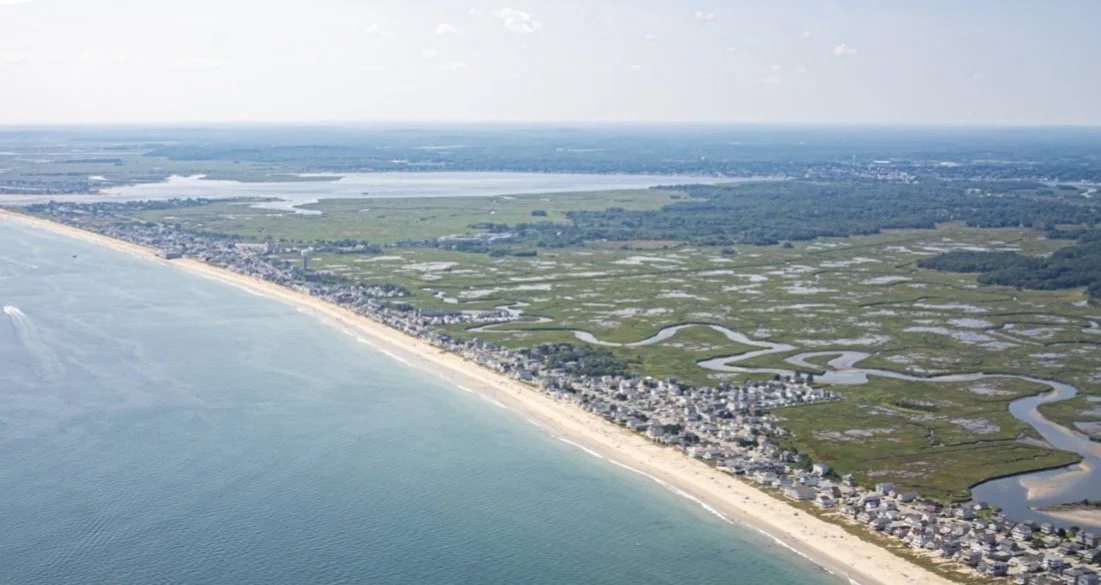
This spring, Hampton finished its first Coastal Resilience Roadmap, the product of seven months of forums, surveys, and community listening sessions.
New Hampshire isn’t perfect, and our primary won’t fix what’s broken in American politics by itself. But the qualities this state demands of its candidates — patience, humility, the willingness to stand in a room full of people who disagree with you — aren’t quaint traditions. They’re exactly what’s missing from national politics right now, and why New Hampshire should retain its first-in-the-nation primary.
What we need now is a federal delegation with the courage to bring this same innovative and evidence-based approach to their work in Washington. You want to talk about property tax relief? Here are two ways the federal government could help lower your property taxes, now.
I have spent my career studying the consequences of U.S. military action. I teach about international conflict and diplomacy. I have lived in communities still scarred by the legacy of U.S. nuclear testing. I do not romanticize war or underestimate how quickly “major combat operations” can become a global catastrophe.
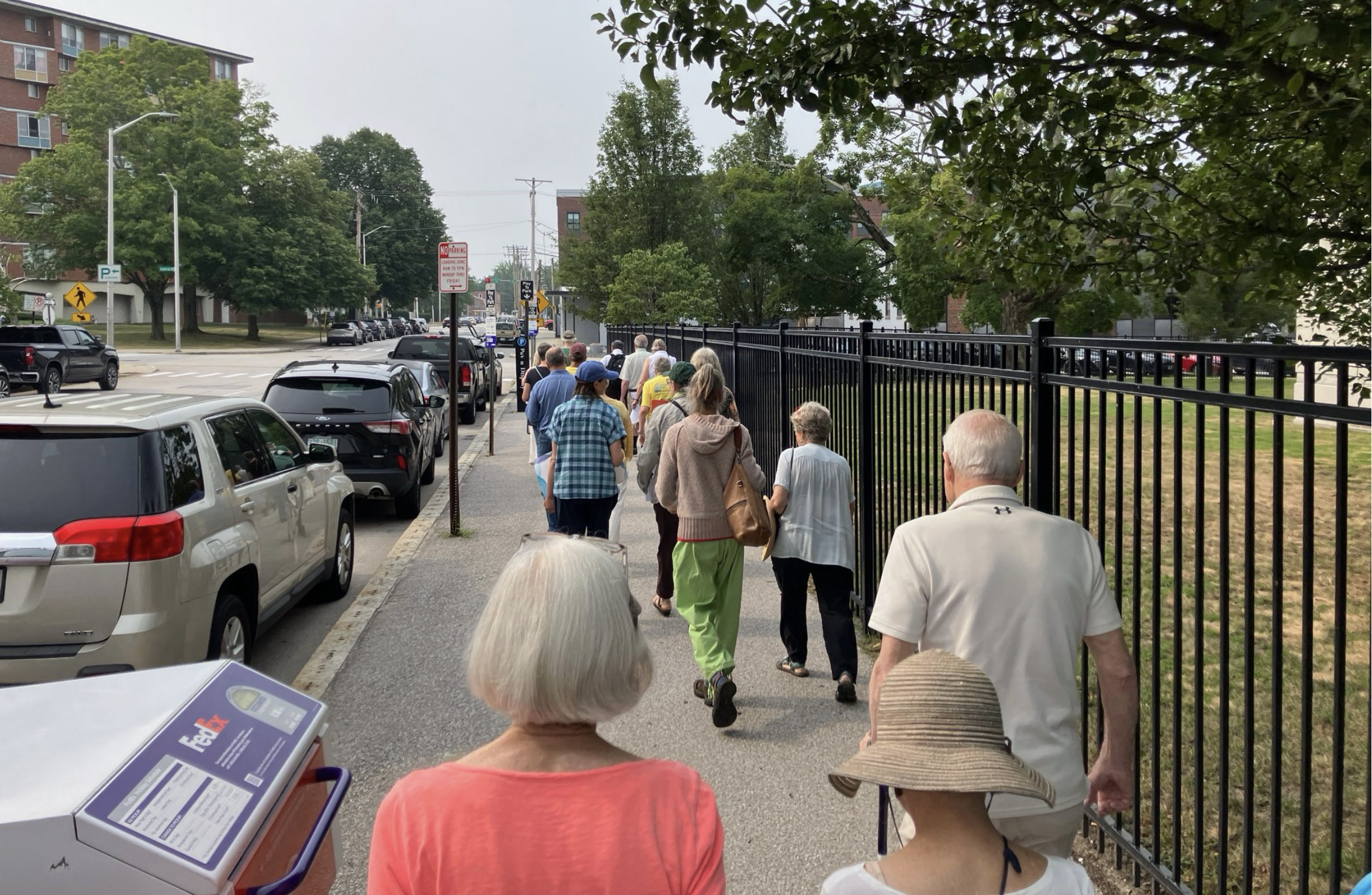
Every month, I join faith leaders and immigration activists to sing, pray, and walk seven times around the Norris Cotton Federal Building in Manchester, where ICE has its New Hampshire office. As in the story of Joshua and the walls of Jericho from the Hebrew Bible, those who walk this path each month know that the aspiring Americans we’re walking for face long odds. Still, we walk undeterred.
A recent study led by researchers at the Harvard T.H. Chan School of Public Health found that living closer to a nuclear power plant is associated with higher cancer rates, with risk increasing with age and decreasing the farther from these plants people live. The study examined data from seven nuclear power plants located within 120km of Massachusetts zip codes, including Seabrook Station in New Hampshire.
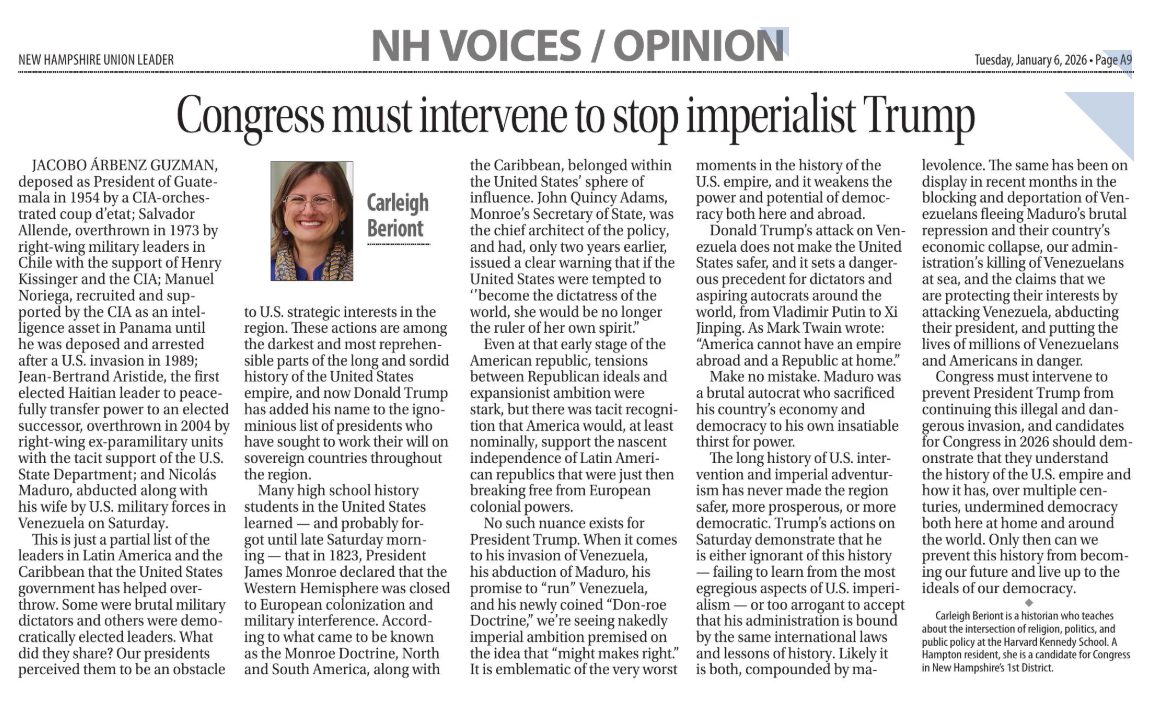
"When it comes to Trump's invasion of Venezuela, his abduction of Maduro, his promise to “run” Venezuela, and his newly coined “Don-roe Doctrine,” we’re seeing nakedly imperial ambition premised on the idea that “might makes right.” It is emblematic of the very worst moments in the history of the U.S. empire, and it weakens the power and potential of democracy both here and abroad."
Child care is not a perk. It’s the backbone of our economy. If New Hampshire wants families and businesses to thrive, investing in child care is not optional. It’s essential.
Earlier this month, when Republicans in DC passed Trump’s ruthless and reckless budget bill, they voted to take away healthcare and food from families in order to give more tax breaks to literal billionaires and run up our national debt. Out of the many headline-grabbing policies in this Frankenstein’s monster of a bill, what’s gotten less attention is how the legislation nationalizes school vouchers as part of a larger agenda to defund and ultimately destroy public education across the country.